
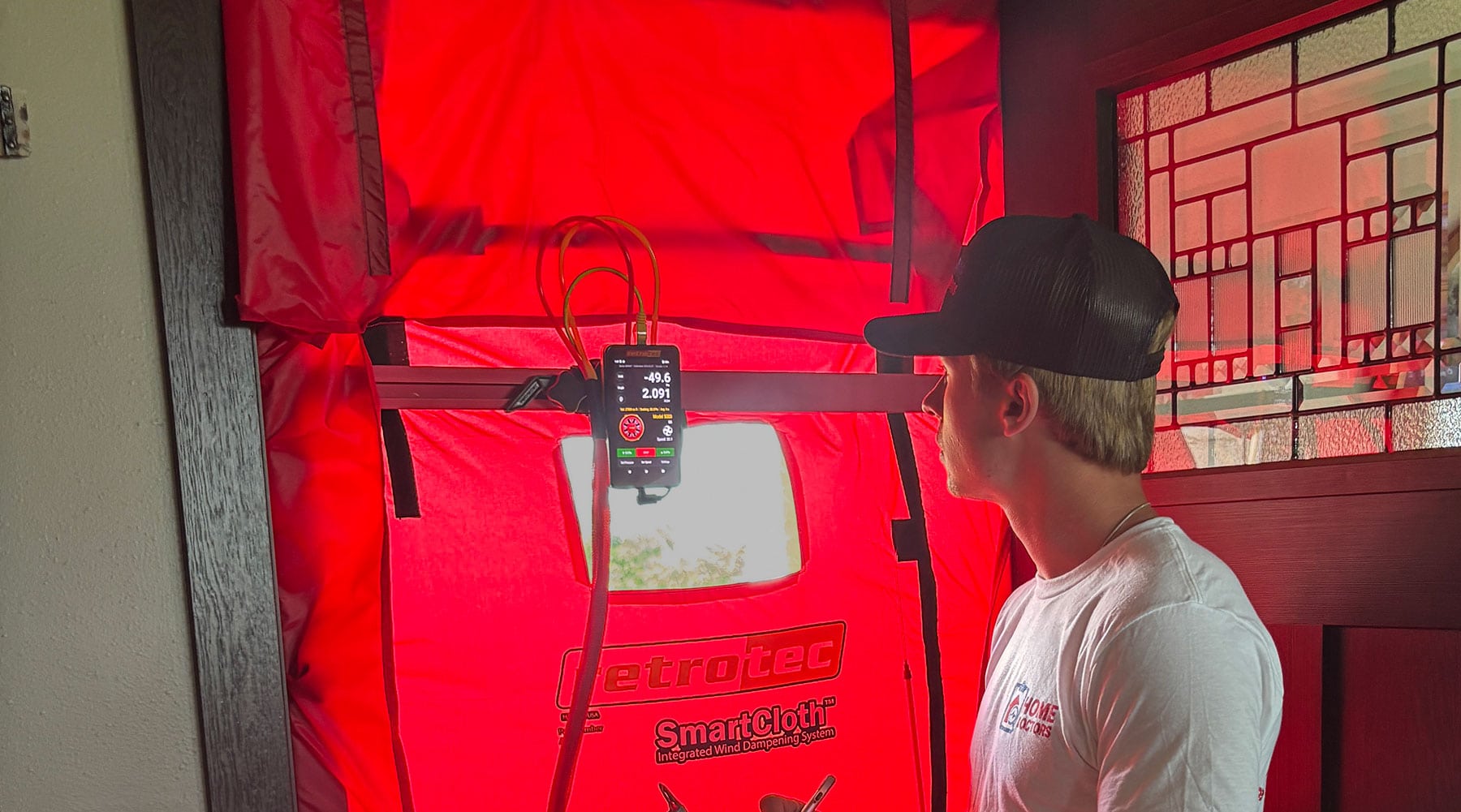
Home Doctors Performing A Complete Air Quality Inspection

Complete Air Quality Inspection includes blower door testing, thermal imaging, and IAQ / radon checks.

A “full” home inspection combining these services gives a more holistic evaluation than a standard visual-only home inspection. By pairing data-driven testing with hands-on expertise, we can diagnose your home’s condition from the inside out. Each test provides a different piece of the puzzle to create a complete picture of how your home is performing.

  • Blower Door Test
    Helps quantify air infiltration/leakage; locates leak areas so we can seal them; improves energy efficiency, comfort, and indoor air quality.

  • Thermal Imaging / Infrared (IR) Scanning
    Reveals hidden issues like moisture intrusion, insulation gaps, overheating electrical components, HVAC leaks, etc.

  • IAQ (Indoor Air Quality) & Radon Testing
    Detects health-risk conditions (e.g. high radon, mold, CO) and helps assess overall air quality inside the home.

Frequently Asked Questions

  • Energy efficiency & utility savings: You’ll know how “tight” your home is and where you lose heating/cooling; sealing leaks and filling insulation gaps reduces waste.
  • Comfort and consistency: Fewer drafts, more even temperatures, better comfort.
  • Moisture control & mold prevention: Thermal imaging can spot moisture intrusion before visible damage; sealing leaks prevents humid air infiltration that leads to mold.
  • Electrical & mechanical safety: Detect hot spots in electrical panels or wiring (overloaded or faulty) before they become hazards.
  • Health & safety: Radon detection, CO detection, mold or pollutant sampling gives you data on risks to occupant health.
  • Prioritized repairs: Because you have quantitative data, you can prioritize what fixes give the most return.
A standard inspection is mostly visual, while a complete inspection uses diagnostic tools like a blower door test, thermal imaging, and indoor air quality checks. These advanced tests reveal hidden leaks, moisture, insulation gaps, and air quality issues that aren’t visible to the eye.
A blower door test measures how airtight your home is. A calibrated fan is set in an exterior doorway to gently pressurize or depressurize the house. The inspector can then identify where air leaks are occurring—often around windows, doors, attics, and foundations. This helps improve energy efficiency and comfort.
Thermal imaging uses an infrared camera to “see” temperature differences on surfaces. It can detect missing insulation, hidden moisture, electrical hot spots, or even pest activity behind walls—problems that may not show up during a visual inspection.
IAQ (Indoor Air Quality) tests measure things like humidity, pollutants, or potential mold growth. Radon testing checks for the naturally occurring radioactive gas that can seep through foundations. Both help identify invisible health risks inside the home.

Ready to see how healthy your home really is?

Request your home diagnosis today!

"*" indicates required fields

This field is for validation purposes and should be left unchanged.
Name*
How can we help you?